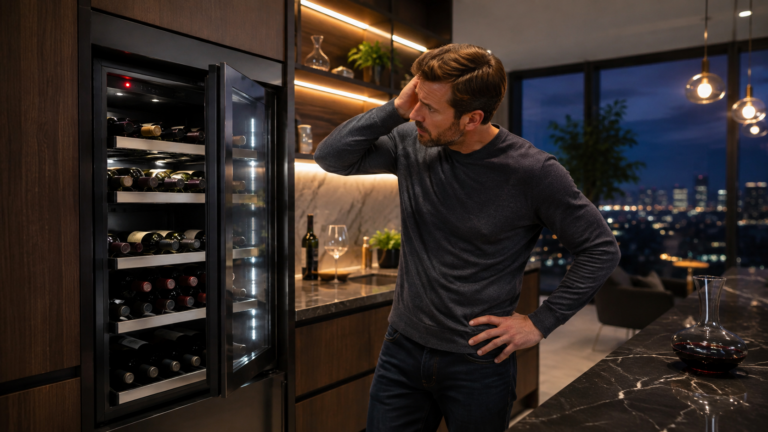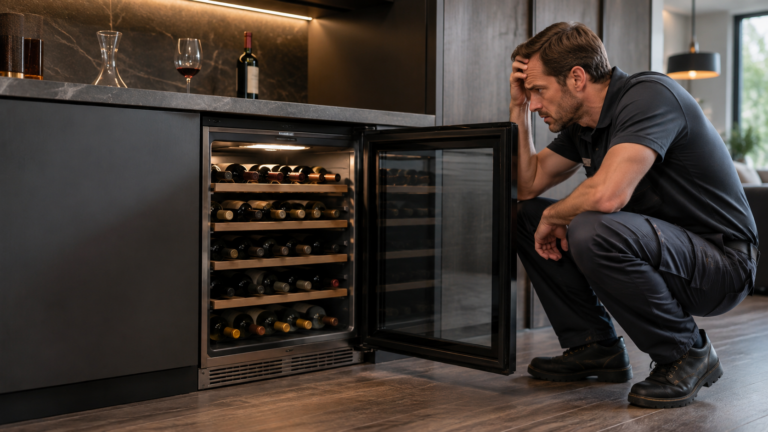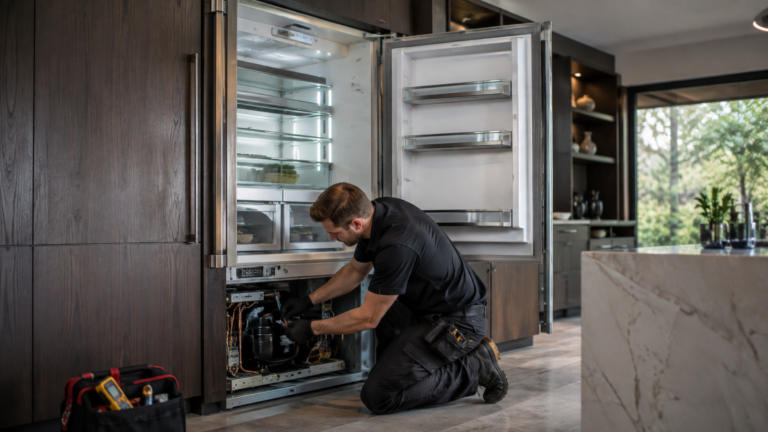
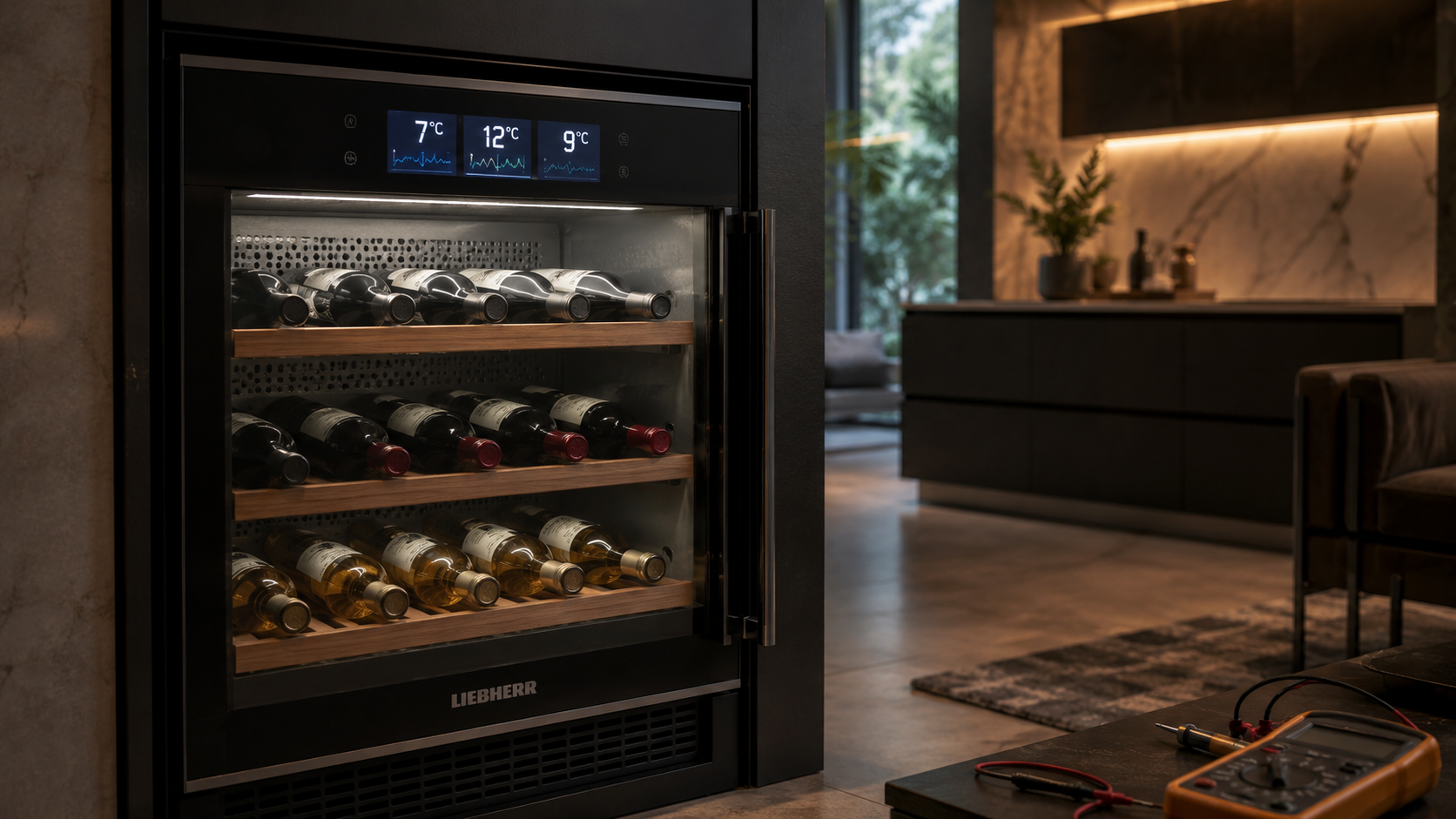
Wine storage is especially sensitive to repeated temperature movement. A short change after the door opens is normal; a Liebherr wine fridge that repeatedly overshoots, undershoots, or drifts between zones needs a stability-focused diagnosis.
Wine storage is especially sensitive to repeated temperature movement. A short change after the door opens is normal; a Liebherr wine fridge that repeatedly overshoots, undershoots, or drifts between zones needs a stability-focused diagnosis.
The useful question is not only whether the appliance is malfunctioning, but when, where, and under what conditions the symptom appears. When troubleshooting unstable temperature in a Liebherr wine refrigerator, verify the observable condition first and then narrow the fault path. That keeps a temporary load, door event, or setup issue from being mistaken for a failed component—and it also keeps a real intermittent problem from being hidden by repeated resets.
Warm bottles and long door openings can create a temporary swing that the cabinet later corrects.
A built-in installation that cannot reject heat consistently may cycle through wider temperature changes.
The fan helps maintain even temperature. Intermittent circulation can create zone-specific spikes.
A sensor that drifts can cause the control to react late or overcorrect.
Brief power events or electronics faults can reset operating states and create recurrent temperature deviations.
A persistent air leak produces repeated warming, condensation, and longer cooling cycles.
Use this order for unstable temperature in a Liebherr wine refrigerator so each observation gives you information for the next step.
After these checks, let the appliance operate normally and judge whether the original problem has actually changed. A short-lived improvement after moving food, opening a door, or restarting power is not the same as a stable repair. This matters specifically for unstable temperature in a Liebherr wine refrigerator.
Liebherr states that current wine refrigerators use precise electronic control and may monitor temperature with multiple sensors to warn about critical deviations. The diagnostic objective is therefore to determine whether the swing is a real cabinet event, a sensor/display discrepancy, or a normal recovery after use.
The value of that pattern is not that another owner's repair should be copied. For unstable temperature in a Liebherr wine refrigerator, the symptom sequence tells you what to measure next and which broad fault paths become less likely.
| Pattern | What it can mean | Best next check |
|---|---|---|
| Door-opening and loading effects | Warm bottles and long door openings can create a temporary swing that the cabinet later corrects. | Use a min/max thermometer or logger in each active zone for at least a full normal-use cycle. |
| Ventilation or ambient heat | A built-in installation that cannot reject heat consistently may cycle through wider temperature changes. | Compare the display with the measured trend rather than a single instant reading. |
| Interior fan intermittency | The fan helps maintain even temperature. | Note door openings, room-temperature changes, and compressor/fan operation. |
| Sensor discrepancy | A sensor that drifts can cause the control to react late or overcorrect. | Confirm bottles are not blocking the circulation path. |
Use this table to triage unstable temperature in a Liebherr wine refrigerator, not as a parts list. If more than one row fits, correct the obvious operating condition first and then reassess the original symptom after the appliance stabilizes.
If resolving unstable temperature in a Liebherr wine refrigerator would require live-voltage measurements, internal control-board access, refrigerant work, or disassembly beyond the owner instructions, stop at the observation stage and move to model-specific service.
Arrange service rather than continuing trial-and-error if any of the following applies to unstable temperature in a Liebherr wine refrigerator:
At that point, unstable temperature in a Liebherr wine refrigerator needs part-level testing based on the exact model/service number and its documentation.
If the basic checks do not explain unstable temperature in a Liebherr wine refrigerator, request a diagnosis with the model/service number, measured temperatures, display state, and a short timeline of what changed. Those details let the technician reproduce the fault instead of beginning with random part replacement.
CTA: Schedule Service · Call (305) 555-0142
Small cycling and short recovery changes are normal. Repeated large swings, slow recovery, or zone-to-zone instability are not.
Yes. Air temperature responds faster than the thermal mass of bottles. Trend data over time is more useful than one air reading.
A zone-specific fan, sensor, control, air path, or door-seal issue may affect one compartment while another remains stable.
Do not chase a fault by repeatedly changing the setpoint. First log the actual temperature and identify whether the problem is load, ventilation, airflow, sensing, or control.
A beeping Liebherr wine refrigerator is usually trying to report a door or temperature condition, not merely making an unexplained sound. The…
A Liebherr wine refrigerator must do more than feel cool: it must hold the selected zone temperature consistently without excessive heat, vibration,…
Liebherr Monolith is a premium built-in platform with electronic controls, advanced airflow, and model-dependent smart features. A 'not cooling' complaint should therefore…
Share a few details and we’ll confirm an appointment. Prefer to talk? Call us and we’ll help right away.
Fill in the form below and we’ll confirm an appointment.